Honest fit check · No tourism brochure
Avoid a $300,000 Mistake: Should You Study Your University Degree in Germany Instead of the U.S.?
Germany can be one of the highest-ROI education systems in the world, with near-zero tuition at public universities, strong international degrees, and real career upside in Europe. But it is not the right path for every student, budget, or long-term plan.
- See which German universities actually accept U.S. students
- Understand real costs, including living and hidden expenses
- Identify whether Germany fits your academic and career goals
- Avoid choosing the wrong country for the wrong reasons
Free. No obligation. Just clarity on whether Germany fits your goals.
661+ students have already trusted us
Free · No obligation
You Do Not Need More Information. You Need a Correct Decision.
Germany is often presented as a simple, almost free alternative to U.S. universities. That is only partially true. The real decision depends on your academic background, degree level, language readiness, and long-term goals.
Why Study in Germany as an American?
Germany is not just affordable. It is one of the few countries where low cost and high academic quality genuinely coexist — if you understand how to navigate the system.
Near-Zero Tuition
Many public universities charge little to no tuition, creating one of the strongest value propositions globally for higher education.
Strong Academic Reputation
Germany excels in engineering, business, and technical fields, with institutions consistently ranked among the best in the world.
European Career Access
A German degree opens doors to the European job market and long-term career pathways across the continent.
Rigorous, Structured System
Germany's education system is built on academic depth, specialization, and structured independence — not hand-holding.
Unmatched Cost-to-Quality Ratio
The overall return on investment is hard to beat anywhere in the world, especially for students who qualify for public universities.

What Kind of Student Is a Strong Fit for Germany?
Germany rewards a specific type of student. Before you start researching programs, make sure the country itself matches your academic personality, budget, and career goals.
Strong Fit
- Students who are highly academic and structured
- Students who want maximum return on investment
- Students open to international career pathways
- Students willing to navigate a more complex system upfront
- Students comfortable with independence and responsibility
Proceed with Caution
- Students expecting a U.S.-style campus experience
- Students who want a highly guided or flexible academic system
- Students unwilling to deal with bureaucracy or structure
- Students who want a purely English environment at undergraduate level
- If your main reason is weather and/or image, this is likely a bad decision
What Americans Often Misunderstand About Germany
Germany is not difficult because it is expensive. It is difficult because the system is precise, structured, and unforgiving if you misunderstand the requirements.
"Germany is one uniform system"
Cities like Berlin, Munich, Frankfurt, Cologne, and smaller university towns offer very different experiences in terms of cost, culture, career access, and language environment.
"Free tuition = easy admission"
Free tuition does not mean simple entry. Germany's public universities have strict academic requirements, and eligibility pathways for U.S. students can be complex and unforgiving.
"Everything is taught in English"
English-taught programs are more limited at the undergraduate level. At master's level, options increase — but assuming full English availability is a common and costly mistake.
"Public and private are interchangeable"
Public universities dominate Germany's academic landscape in quality and reputation. Private institutions serve more niche roles. Most Americans over-focus on private options when Germany's real strength is its public system.
What Does It Actually Cost to Study in Germany?
Germany can dramatically reduce total education cost compared to the U.S., but only if you qualify and choose the right path. The real strength is the public university system — not the private market.
Tuition
Public Universities
~$0–$1,500/year
Private Universities
~$5,000–$20,000/year
Premium Private Universities
~$20,000–$40,000/year
Living Costs
Munich & Frankfurt
High-cost cities
Housing (shared room, city center)
$600 – $900/month
Food & groceries
$300 – $450/month
Transportation
$40 – $60/month
Health Insurance
$100 – $130/month
Berlin, Hamburg & Cologne
Mid-cost cities
Housing (shared room, city center)
$400 – $650/month
Food & groceries
$250 – $400/month
Transportation
$35 – $55/month
Health Insurance
$100 – $130/month
Heidelberg, Freiburg & Others
Smaller university towns
Housing (shared room, city center)
$300 – $500/month
Food & groceries
$200 – $350/month
Transportation
$30 – $50/month
Health Insurance
$100 – $130/month
Bachelor's Degree: Germany vs. the U.S.
Public University in Germany vs. a Top 100–200 ranked U.S. Private University
| Germany (Public) | U.S. Private (Top 100–200) | |
|---|---|---|
| Tuition | $750 | $50,000 |
| Housing | $5,400 | $13,500 |
| Living Expenses | $4,200 | $7,200 |
| Books & Materials | $300 | $1,500 |
| Health Insurance | $1,400 | $3,200 |
| Fees | $600 | $2,800 |
| Travel (flights home) | $2,000 | $0 |
| Annual Total | $14,650 | $78,200 |
| Years | 4 | 4 |
| Total for Bachelor's | $58,600 | $312,800 |
| Savings | $254,200 | — |
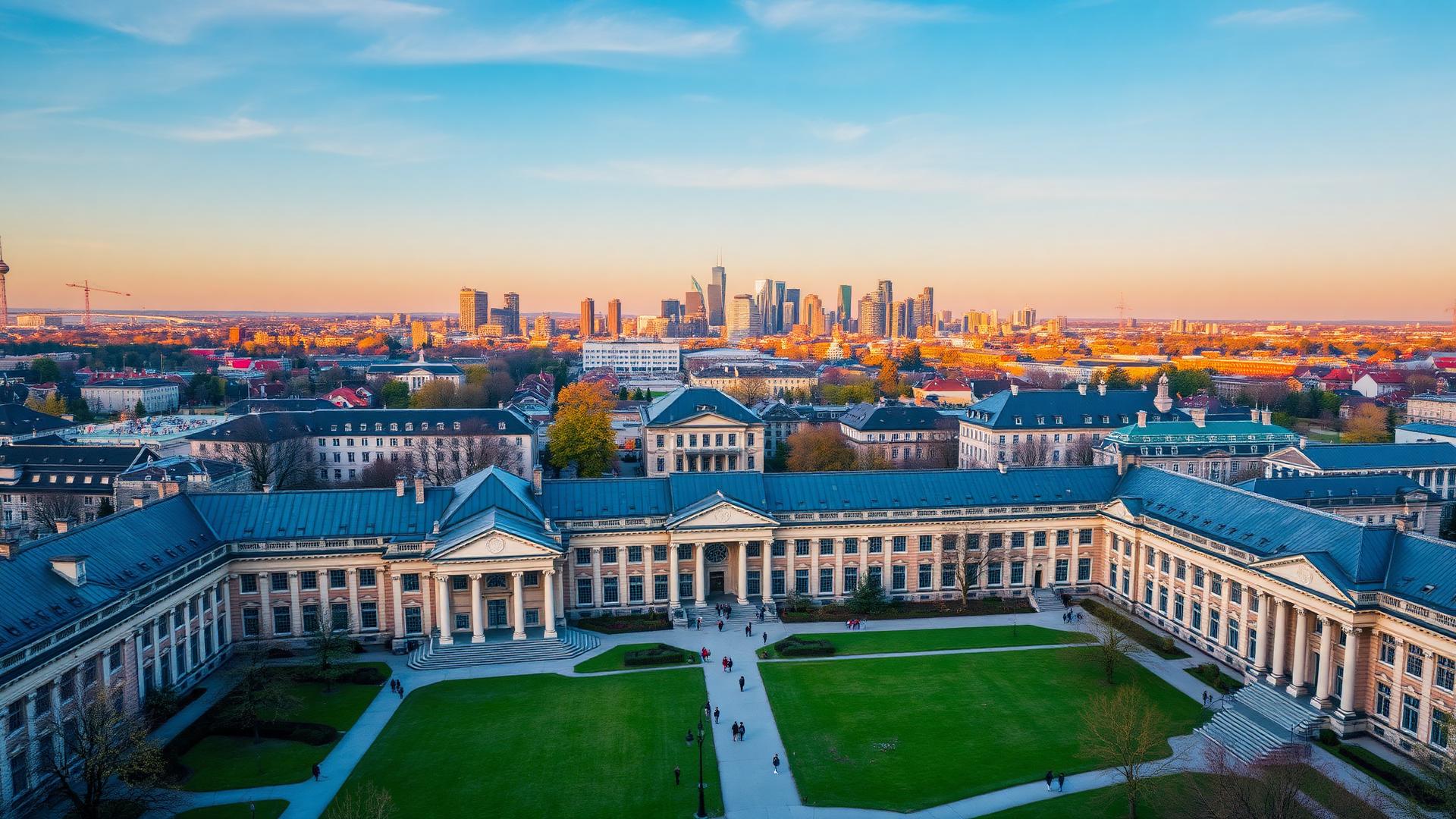
Main Cities for Studying in Germany
Germany is not one market. Your city choice shapes your cost, language environment, career access, and daily quality of life in fundamentally different ways.

Berlin
International exposure, startup culture, and diverse student life.
Best for:
Creative and business students, international mindset, students seeking dynamic environments.
Watch out:
Less traditional campus structure. Housing competition is intense.

Munich
Top-tier universities and Europe's strongest economic environment.
Best for:
Engineering and technical fields, students seeking prestige and structure.
Watch out:
Highest cost of living in Germany. Budget carefully.

Frankfurt
Finance capital of Europe with strong business-oriented programs.
Best for:
Finance careers, international business exposure, banking and economics.
Watch out:
Less classic student-city feel compared to Berlin or Cologne.
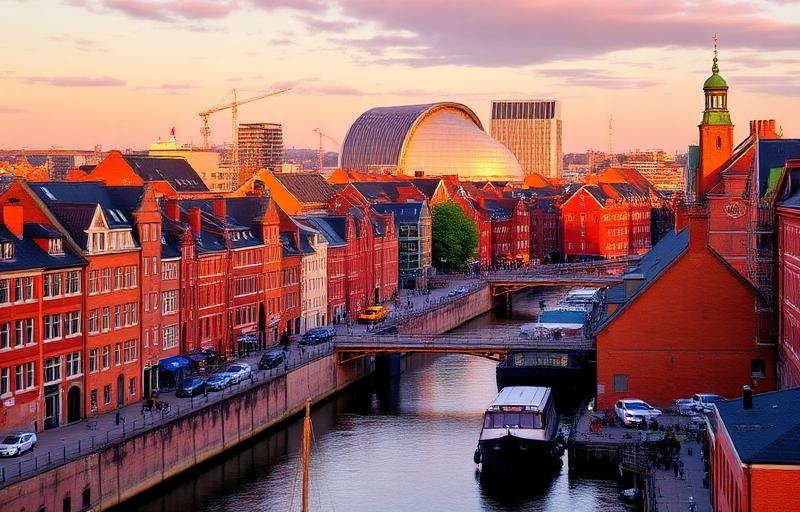
Hamburg
Germany's gateway to the world — strong in media, logistics, and maritime industries.
Best for:
Media and communications students, logistics and trade, students who enjoy a cosmopolitan port-city atmosphere.
Watch out:
Fewer globally ranked universities than Munich. Weather can be challenging.

Cologne
Balanced lifestyle with strong student culture and social energy.
Best for:
Students wanting a social environment, media and communications, balanced city life.
Watch out:
Less global branding than Munich. Fewer English-taught options.

Heidelberg
Traditional university towns with deep academic focus and charm.
Best for:
Academic-focused students, smaller-city preference, research-oriented paths.
Watch out:
Less international scale. Fewer career networking opportunities than major cities.
Strong Universities in Germany
Germany is not a private-dominated system. The strongest opportunities are usually within public universities. Private institutions serve more specialized, niche roles.
Public Universities
Technical University of Munich (TUM)
Munich
Top-tier technical university with global reputation and industry connections.
Best for: Engineering, technology, science
Ludwig Maximilian University of Munich (LMU)
Munich
One of Europe's leading academic institutions with broad program range.
Best for: Humanities, business, science
Heidelberg University
Heidelberg
Germany's oldest university (founded 1386) and a leading research institution, consistently ranked among the top in the country.
Best for: Medicine, natural sciences, humanities
Private Universities
ESMT Berlin
Berlin
High-quality business school with strong international focus and corporate ties.
Best for: Business, management
Frankfurt School of Finance & Management
Frankfurt
Top private option for finance careers, deeply connected to Europe's financial capital.
Best for: Finance, banking
WHU – Otto Beisheim School of Management
Vallendar / Düsseldorf
One of Germany's most renowned private business schools, founded in 1984, with triple accreditation and a strong entrepreneurial culture.
Best for: Business, management, entrepreneurship

Sample Student Profiles
Different goals, budgets, and academic profiles lead to very different paths in Germany. These example profiles show how the right fit depends on who you are.
Ethan
High-achieving student focused on ROI
Goal: Get a strong degree without taking on massive debt
Cities: Munich, Heidelberg
Universities: Technical University of Munich
Why it works:
Germany offers him elite-level education with minimal tuition cost. His strong academic profile makes him competitive for top public universities.
He must meet strict academic and language requirements. The system will not hand-hold.
Sophia
Internationally minded business student
Goal: Build a career in Europe
Cities: Berlin, Frankfurt
Universities: ESMT Berlin, Frankfurt School
Why it works:
Germany gives her access to Europe's largest economy. Private business schools offer strong English-taught programs with corporate networks.
Private options can be expensive without guaranteed ROI. She needs to be strategic about which private route justifies the cost.
Marcus
Engineering student seeking global experience
Goal: Study engineering at a world-class institution abroad
Cities: Munich, Cologne
Universities: TUM, RWTH Aachen
Why it works:
Germany's public engineering programs are globally ranked and nearly free. His technical focus aligns perfectly with the system's strengths.
German language proficiency will likely be required. He should start preparation early.
Most students get this decision wrong. A 20-minute conversation prevents that.
Germany can be an incredible opportunity or a frustrating dead-end. The difference is almost always in how the decision is made — not whether Germany is a good country.
Free. No obligation. No sales pitch. Just honest clarity.
Frequently Asked Questions
Thinking About Germany? Make the Decision with Clarity.
Before you commit to Germany, make sure it actually fits your goals, qualifications, and long-term plan. A focused conversation is the smartest next step.
20 minutes. Free. No obligation.
Kalender wird geladen...
Wer hinter Epro 360 Elite steht
Ein Team, das den Weg selbst gegangen ist.
Bei Epro 360 Global begleitet dich kein Algorithmus, sondern Berater, die selbst an Top-Universitäten auf der ganzen Welt studiert haben und seit über zehn Jahren deutschsprachige Bewerber strategisch positionieren – mit direktem Zugang zu Admissions-Insidern vor Ort.

Jonas Kehrbaum
Mitgründer & Geschäftsführer
Selbst USA-Absolvent. Begleitet seit über 10 Jahren deutschsprachige Familien durch den Bewerbungsprozess.

Francisco Galvez
Mitgründer
Mitgründer von Epro 360. Verantwortet Strategie und Operations und stellt sicher, dass jede Familie eine durchdachte Begleitung bekommt.
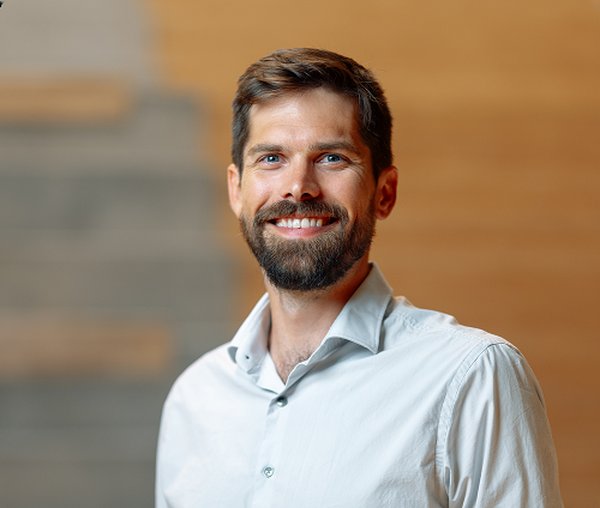
Alexander S. Johnson
Head of Elite Admissions
Leitet das Elite-Zulassungsprogramm. Arbeitet eins-zu-eins mit Bewerbern an Spitzenuniversitäten in den USA.

Emma Ring
U.S. Study Consultant
Berät deutschsprachige Familien zu Studienoptionen in den USA. Plant gemeinsam mit Bewerbern den richtigen Weg an die passende Universität.
Plus weitere Berater im Hintergrund

Lette
Senior University Researcher

Laura
University Researcher

Carla
Application Support

Chiara
Head of Brand Marketing

Susann
Brand & Social Media

Raquel
University Researcher